
EVA core hardness: how the foam changes the way a racket plays
· 2 min read
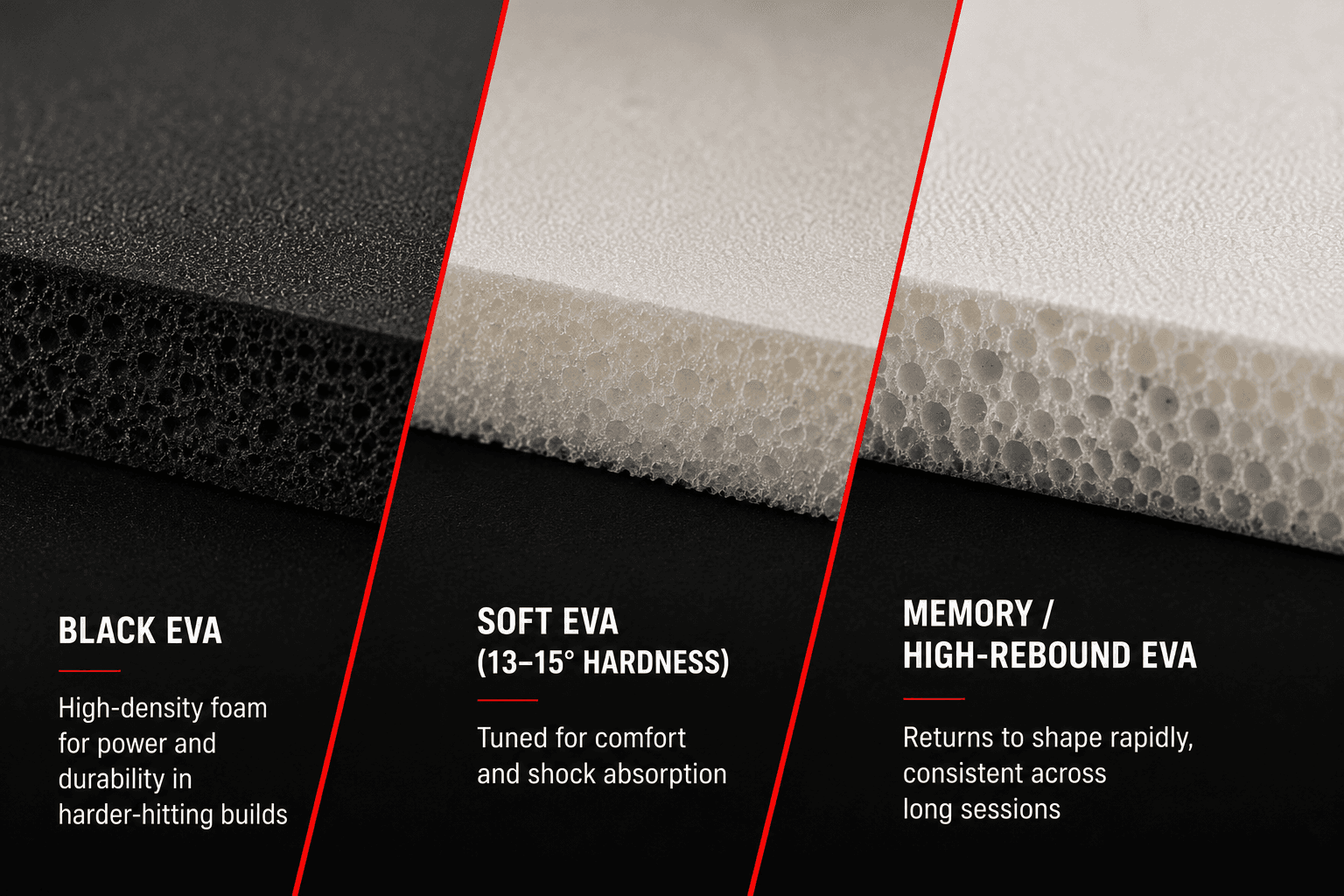
The core is what the player actually feels at contact. Three EVA options cover most requirements, and the choice is about comfort as much as power.
The face gets the attention, but the core is what the player feels. It sits between the two carbon faces and determines how long the ball stays on the racket, how much energy comes back, and how much shock reaches the arm over a two-hour match.
EVA — ethylene-vinyl acetate — is a closed-cell foam. Denser foam compresses less, returns energy faster, and feels firmer. Softer foam compresses more, holds the ball fractionally longer, and feels more controlled. That is the entire trade-off, and every core option is a point on it.
- Black high-density EVA — the firmest option. More power, and it holds its properties over long play, which matters for rackets that get used daily.
- Soft EVA at 13-15° hardness — more dwell time and more control, and noticeably easier on the elbow and shoulder.
- Memory / high-rebound EVA — recovers its shape quickly for a livelier response, and stays consistent across a long session.
Comfort is the factor most often underweighted when brands spec a first line. Padel has a large recreational player base, many of whom play several times a week and are prone to elbow problems. A softer core is frequently the better commercial decision even when a firmer one would test better with advanced players, simply because it suits more of the people actually buying.
Core and face should be chosen together. A soft core under a stiff 24K face produces a very different racket from the same core under 3K, and specifying them separately is how brands end up with a sample that technically matches the brief but does not feel like what they imagined.