
How surface texture affects spin — and why sprayed grit wears off
· 2 min read
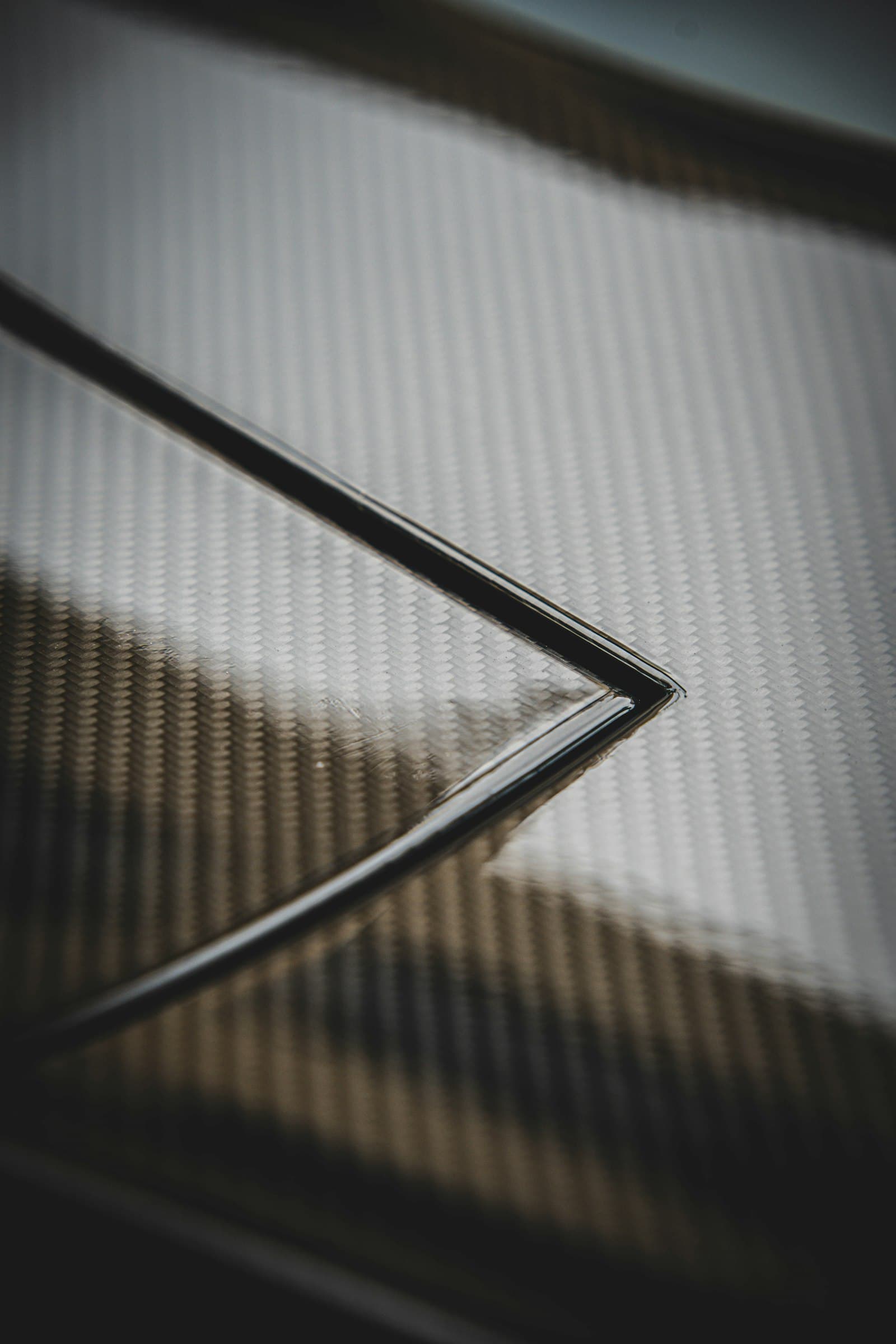
Texture generates spin by gripping the ball. How it is applied determines whether it still works after a season of play.
Surface texture works by increasing friction between the face and the ball at the moment of contact, letting the racket grip and rotate it rather than simply pushing it. More grip means more spin available to the player.
The important distinction is not which texture pattern you choose but how it is applied. Texture that is sprayed onto a finished frame as a grit coating works well when the racket is new and then progressively wears smooth in exactly the area the player uses most. Texture that is molded into the frame is part of the structure, so it does not wear off.
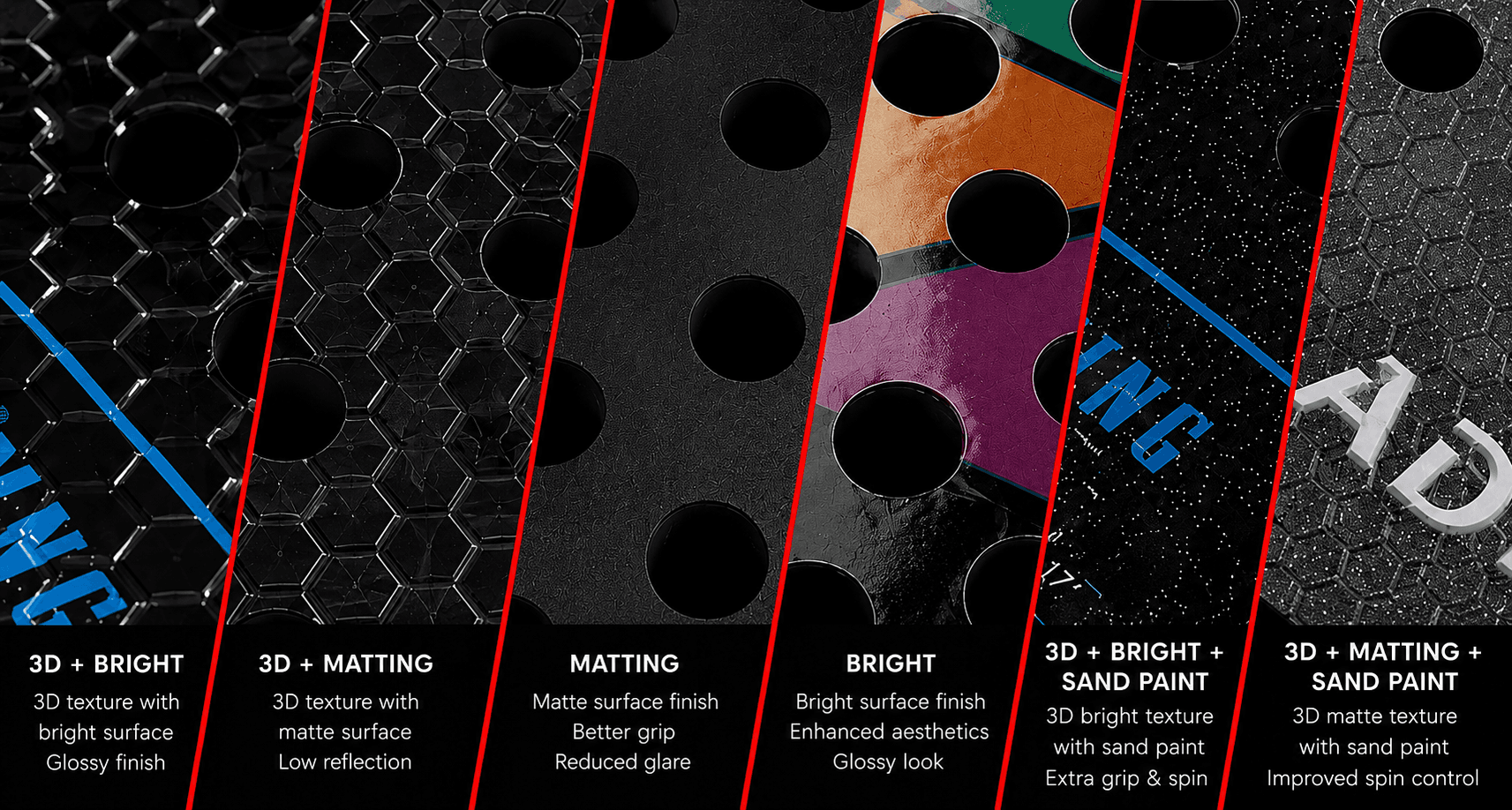
We mold texture directly into the frame. The available options are:
- 3D grain — a directional surface pattern molded across the face.
- 3D hexagon — a geometric molded pattern, visually distinctive as well as functional.
- Sand grit — a finer, more uniformly abrasive surface.
- 3D decals — raised applied elements, usually combined with graphics.
There is a durability consideration worth raising with any manufacturer: aggressive texture is harder on balls. A very abrasive surface will generate more spin and wear balls faster, which matters to clubs buying in volume even though it rarely comes up in a product brief.
Texture also interacts with your graphics. Heavily molded patterns constrain where artwork sits cleanly, so it is worth deciding the texture before finalising the design rather than after.