
Carbon fibre vs fibreglass: which face material is better?
· 2 min read
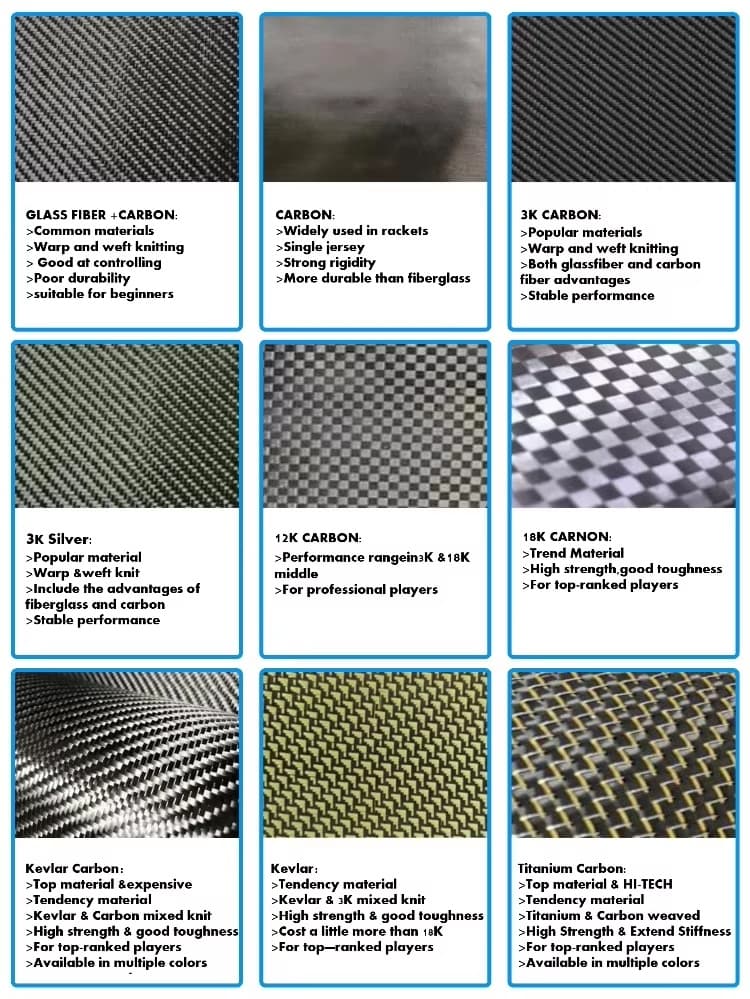
Neither is better outright. Carbon is stiffer, so it returns more of what you put in and grips the ball harder; fibreglass flexes, so it gives more free power and is kinder on the arm. The right answer depends on who is holding the racket.
This is the first question most brands ask when specifying a face, and it is usually framed as a quality question — carbon good, fibreglass cheap. That framing is wrong, and it leads brands to over-specify rackets for players who would enjoy a softer one more.
What each material actually does
Carbon fibre is stiff. It deforms very little on impact, so it returns energy quickly and predictably, and the surface holds the ball firmly enough to bite for spin. You feel exactly what you did — including your mistakes.
Fibreglass flexes. The face deforms slightly and springs back, adding pace the player did not have to generate. That trampoline effect is why a fibreglass racket can feel more powerful than a carbon one in the hands of someone with a slower swing, even though carbon is the "higher performance" material.
Side by side
| Stiffness | Carbon: high. Fibreglass: low to moderate. |
|---|---|
| Power source | Carbon: comes from the player. Fibreglass: partly from the face. |
| Control and spin | Carbon: more precise, grips harder. Fibreglass: less bite. |
| Comfort | Fibreglass: absorbs more shock. Carbon: transmits more to the arm. |
| Durability | Carbon: holds its properties longer. Fibreglass: softens with heavy use. |
| Cost | Fibreglass is the more accessible option at every volume. |
The comfort argument nobody makes
Padel has a large recreational base playing several times a week, and elbow and shoulder complaints are common. A stiff carbon face transmits more vibration into the arm than fibreglass does. For a range aimed at club players rather than competitors, that is a genuine commercial consideration, not a compromise — softer rackets get played more and returned less.
Hybrids and blends
The choice is not binary. Fibreglass-carbon hybrid layups place each material where it helps, and Kevlar-carbon blends add damping while keeping stiffness. If you have a specific feel or a specific price point to hit, the layup is usually a better lever than switching material outright.
How to decide for your line
- Beginner and club ranges — fibreglass or a hybrid. More forgiving, more comfortable, and cheaper to reach a price point.
- All-round flagship models — 12K or 18K carbon, which balances stiffness against cost.
- Competition tier — 24K carbon, for players with the swing speed to use the stiffness.
- Mixed range — specify per model rather than committing the whole line to one material.