
How to choose your first padel racket
· 2 min read
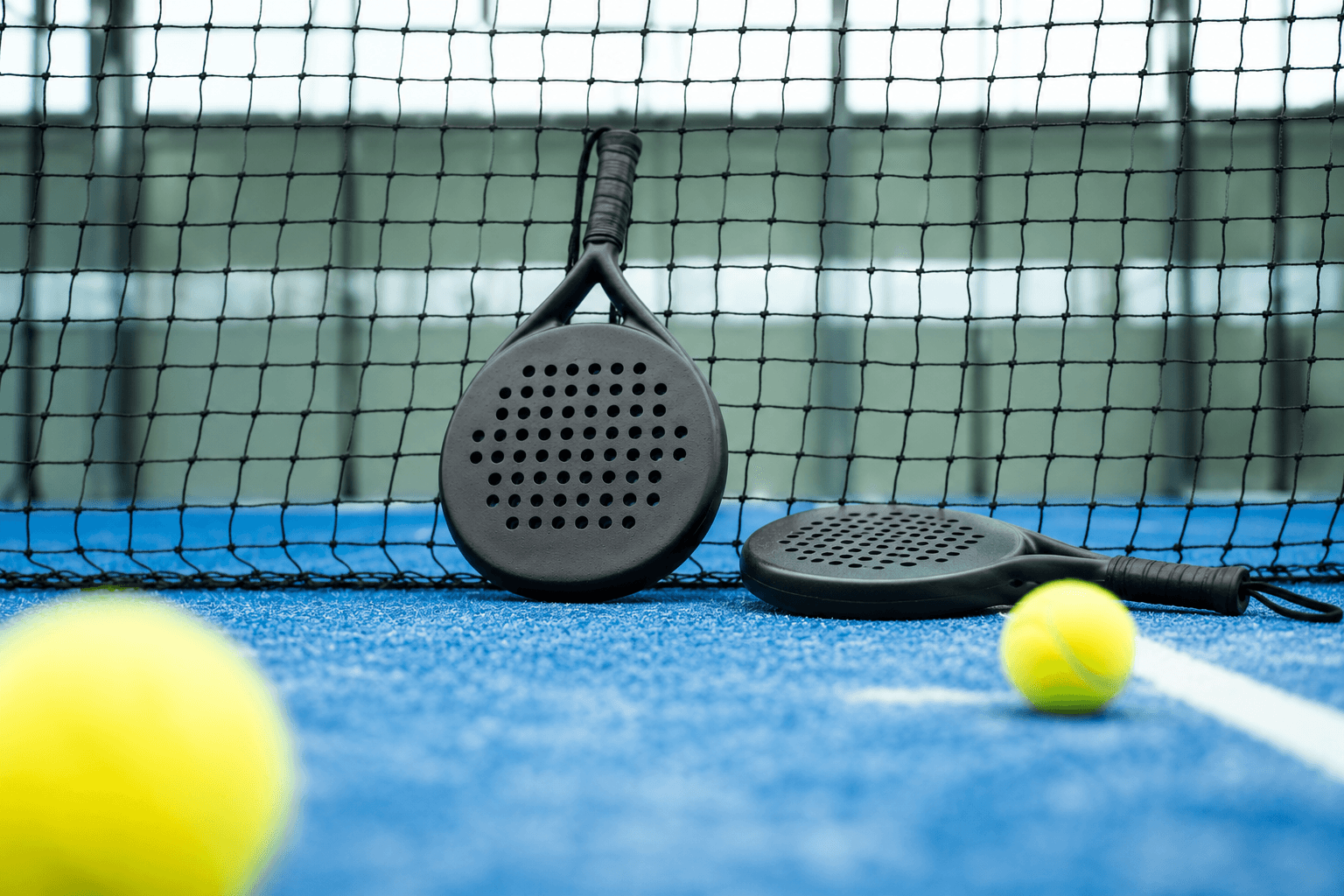
Buy round, light and soft. Almost every beginner mistake comes from buying the racket a professional uses instead of the one that suits a developing swing.
Padel is unusually easy to start and unusually easy to buy badly for. The rackets that get marketed hardest are the ones professionals use, and those are close to the worst possible choice for someone who has played five times.
Start with shape
Round is the beginner shape, and this is not a compromise. A round racket puts the sweet spot low and central, closest to your hand, which means off-centre hits — most of your hits, early on — still go where you intended. It is also the most forgiving on the wrist.
Diamond rackets concentrate weight high in the head. They hit harder if you catch the ball perfectly and punish you severely if you do not. Teardrop sits between the two and is a reasonable second racket once your contact is consistent.
Then weight and balance
Padel rackets typically run 350-380g, with the balance point somewhere between 260 and 275mm. Lighter and lower-balanced is easier: the racket moves faster, reacts better at the net, and is far less tiring across two hours.
Heavier rackets do generate more power, but only if you can still swing them properly at the end of a match. Most players overestimate the weight they want.
The core matters more than you think
A soft EVA core — around 13-15° hardness — holds the ball fractionally longer, which improves control and, more importantly, absorbs shock. Padel elbow is common among people who play several times a week on stiff equipment. A softer core is the single easiest thing to get right for comfort.
Face material
Fibreglass or a low-grade carbon such as 3K suits a first racket. Both flex more than high-grade carbon, which adds forgiveness and free power at slower swing speeds. Save 18K and 24K carbon for when your technique can use the stiffness.
Mistakes worth avoiding
- Buying the racket your favourite professional uses. It is almost certainly a heavy diamond.
- Choosing on looks. Graphics tell you nothing about shape, weight or core.
- Assuming a higher carbon number is better. It means a bigger weave, not a better racket.
- Skipping the wrist strap. It is mandatory on most courts, and it protects other players.
- Ignoring grip size. Too thin makes you squeeze harder, which is how elbows get injured.
A sensible first spec
If you want one answer: a round racket, around 355-365g, low balance, soft EVA core, fibreglass or 3K carbon face. That covers most new players comfortably for a year or two, and by the time it wears out you will know from experience what you want to change.